live stream

Viewing posts tagged live stream

Bulldog DM powers Spotify Awards live stream

Bulldog DM was selected by Spotify to bring the first ever Spotify Awards to the world via a global live stream. The Bulldog DM team worked with Spotify to enable a live video experience from the Spotify Awards viewing hub. Bulldog DM provided all of the transmission, live encoding, testing and video player functionality to bring this incredible experience to life for Spotify Premium users in Latin America and the US as well all Spotify users in other regions. In addition Bulldog DM provided reporting and extensions to social media where fans on Instagram, Twitter and Facebook could see the final minutes of the green carpet show and the first minutes of the actual award show. Mexico City is the #1 streaming location for Spotify in the world and the awards were based on actual data and streams served. The line up included J. Balvin, Bad Bunny, The Black Eyed Peas, Karol G, Julieta Venegas, Banda MS, Piso 21, Reik and others.

SAW_FTR-1

See the show here –> Spotify Awards

Why Livestreaming Is Key for Marketing to Millennial and Gen Z Consumers

adolescent-adult-blur-933964

Thirty years ago, if you wanted your target audience to know about your product, you knew exactly how to reach them. Take out an ad in a magazine or newspaper, or run a 30-second ad spot on their favorite network, and you had guaranteed eyes on your brand. 

Now, the game has changed. In 1998, 73 million people watched the series finale of Seinfeld. Those numbers are unheard of today: Last year’s highest-rated TV series, the ill-fated Roseanne reboot, only drew 10.5 million viewers for its much-hyped premiere.

The truth is that we’re not likely to ever go back to the days when a fifth of the country all tuned into the same exact broadcast: Today, Americans’ attentions are fragmented across thousands of different platforms and devices. Your target buyer isn’t tuned into Must-See NBC on Thursday night and sitting through a 30 second commercial —instead, she’s streaming her favorite shows on Netflix and Hulu, or curating a playlist of YouTube videos to watch on her iPad. 

In fact, 27 percent of Americans between ages 18 and 34 don’t watch traditional TV at all. And of those that do, their attention is declining rapidly: Nielsen found that the time they spent watching TV in 2018 had dropped by 17 percent from the previous year.  

So if you’re trying to raise awareness of your brand, simply running an ad on network TV—no matter how creative or well-executed—is not going to generate the reach that it once did. Instead, you need to think about how to reach your target audience on the platforms they actually are using today.

Why live streaming is ideal for today’s fragmented audience

In order to reach modern consumers, many brands are building highly segmented channel marketing strategies. They’re promoting ads on Google and Facebook, buying ad space on YouTube, and using retargeting to reach consumers wherever they are online. Digital marketing is far more sophisticated than traditional media advertising strategies of the past, with many more avenues for targeting specific types of users and reaching them wherever they are, most forms of digital media are missing one core element: a unified brand experience.

To maximize your impact, you want to build a cohesive brand experience that puts your brand front-and-center in an authentic way. And there’s no better way to do that than with a livestream, either using an already massive platform like Facebook, Twitter or YouTube, or on your own branded portal. Here are a few ways to engage your audience with a branded livestream:

Sponsoring live entertainment

By sponsoring and presenting a live entertainment broadcast, you can tap into the entertainers’ own audiences and build your brand cache, raising awareness and familiarity by powering a branded user experience throughout the course of the event. For example, Coca-Cola sponsored a livestream of the Vive Latino Festival, featuring over 70 musical artists from all over the world. The live stream featured multiple HD cameras enabling a high-quality broadcast from multiple stages allowing viewers to switch stages in real time. It resulted in nearly 4 million views – just from Coca-Cola’s branded web property, with viewers tuning in for nearly two hours on desktop and 30 minutes on mobile devices—an incredible level of user engagement for a branded experience.  The live stream was also extended to YouTube, Facebook and Twitter further amplifying the experience.

Broadcasting a product launch

Livestreams can also be used effectively to promote a product launch. When Hyundai revealed its new Venue crossover SUV and its 2020 Sonata at the New York Auto Show the brand was able to expand its audience exponentially by livestreaming the new models’ reveal on YouTube, Facebook, Twitter, Instagram and Hyundai.com. The livestream helped to boost media attention to the new vehicles, resulting in nearly 260 million brand impressions around the launch. 

Running a live Q&A

Livestreams don’t always need to be geared around big events—they can also serve as an effective way to boost engagement through interactive forums with your fans. Take Wilton Cake Decorating, for example. The cake decorating supplies company has built a massive social audience of more than 2 million Facebook followers, thanks in large part to its weekly Facebook Live events. The brand uses Facebook Live to share a live broadcast of a specific baking or decorating technique, such as “How to Make a Pineapple Pull-Apart Cake.” During the livestream, the Wilton staff reads and responds to questions from their viewers in real-time. It’s a great way to build a stronger connection with your fans and extend your reach to new audiences.

Partnering with an influencer

You can draw even more attention to your brand by engaging with an influencer marketing campaign—asking the influencer to collaborate on an authentic experience involving your brand. A great example of this strategy in action is the Kohl’s 2016 campaign with popular makeup vlogger Judy, whose YouTube channel ItsJudyTime has over 2 million subscribers. She went on a sponsored Black Friday shopping spree at Kohl’s with her mother which was broadcast live on Facebook, then followed up with a blog post that linked to all of the products she purchased at Kohl’s. The promotion generated nearly 200,000 views to the post.

In order to build a brand relationship with today’s cord-cutting consumers, it’s important to look beyond TV and magazine ads, which are quickly becoming obsolete. 

According to eMarketer, millennials are the biggest consumers and creators of live video—63% have watched live content and 42% have created it. 

And while digital marketing strategies can be helpful for keeping your brand top of mind, there’s nothing more powerful than a livestream for generating fresh attention to your brand and creating an authentically engaging experience. As you seek to build your marketing strategy for 2020, think about how you can bring best-in-class live streaming into your game plan to create a truly connected brand experience for your target audience. 



The Auto Streaming Rush

Screen Shot 2019-08-25 at 11.45.50 AM

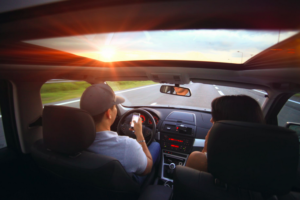
The competition for music streaming supremacy entered a new realm this past week, the automotive industry. Car brands have noted consumers demands for certain streaming platform integrations and it has now led to a rush of partnerships with streaming giants like Spotify, Apple, Amazon, and Google.

This was made most evident on Wednesday with Tesla’s partnership announcement with Spotify. The consistent lobbying by Tesla owners for a Spotify integration was finally fulfilled when Elon Musk released the announcement via Twitter.

Porsche also announced this week that their upcoming Taycan electric sports car will include Apple Music. Porsche noted that 80% of their consumers use Apple Music as their primary streaming platform. Porsche CEO, Klaus Zellmer, additionally stated that Porsche “will always be very cautious about whom we grant access to our digital ecosystem in our cars.”

The integration of streaming music platforms in the automotive industry has been a strategy in motion for years. However, the recent push to integrate streaming has been born out of new studies showing that Americans have been increasing their driving time. Drivers have been looking to fill that increased void of time with their favorite music delivered in a convenient method.

The music streaming platform that will provide the most content delivery in the automotive industry is still to be determined.

Four Ways The Business Of Music Videos Will Transform In 2019

pexels-photo-639090

Over time, music listeners have started to prefer audio being accompanied with visuals rather than listening to audio alone. According to YouTube’s Global Head of Music Lyor Cohen, “The music business used to be an audio business, and then it became an audiovisual business. Now, I think it’s going to become a visual audio business.” For 2019, Forbes predicts that there will be four major trends in video that will have a big impact in the music indusrty. You can find those four trends in the following article:

Forbes —> www.forbes.com

Bulldog DM to speak on Digital Entertainment World panel on live streaming + music festivals + brands

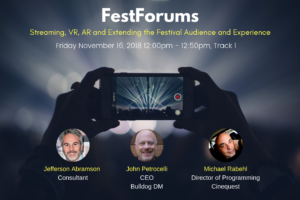
On Feb. 4, 2019, Bulldog DM CEO John Petrocelli will be participating in DEW’s “MUSIC: Expanding Music Festivals Through Live Streaming: Connecting Brands With Viewers Around The World” panel. The panel will discuss how festivals and their partners are creating experiences where viewers can connect with fellow audience members and truly feel part of the event – while brands can engage the digital audience without being overly intrusive.

DEW


Find More Information At —–> www.dewexpo.com

3 Ways Live Streaming is Changing the Way We Consume Media

Entertainment has constantly evolved throughout history and live streaming is contributing to that current evolution.  Live streaming is a recent development that is consistent with today’s emphasis on the experience economy as it creates and offers realtime, collaborative participatory broadcasting.

Live streaming is changing the way we interact with brands, attend events, and market. Live streaming is creating new opportunities for artists, content owners, brands and publishers. Here are a few ways that that live streaming is changing the way we consume media:


We Don’t Get FOMO if We Can’t Make the Show

FOMO, or the fear of missing out, presents an opportunity that brands can capitalize on and connect with viewers in the age of social media. Millennials see clips and photos of concerts and events that their friends are attending on Snapchat, Instagram, Facebook,Twitter etc. With live streaming, viewers can tune in and experience an event in real time intertwined social media features that include chat, commenting, posting and sharing. No, this phenomenon will not reduce the amount of ticket sales, and in fact creates increased ticket demand for subsequent events, performances and tour dates. It is also opening an entirely new avenue that marketers can maximize.

FOMO is something that marketers and advertisers take into consideration when planning marketing campaigns. For example 1 in 5 millennials attends at least 1 music festival in the US annually and travels on average 903 miles to attend. Live streaming isn’t eliminating this feeling of FOMO, but it is moreover changing how we interact with media and is a strong antidote.

A New Way to Consume Advertisements

Brand spending on live music has seen explosive growth and is now estimated to be a $1.54B business that has seen steady growth over the past several years. Millennials have prioritized shared experiences over buying material possessions to fuel the brand investment in live music.

Brands typically are paying for exposure to the in-venue attendees and eyeballs. Live streaming allows the brands to amplify the experience and connect with a much larger audience who is deeply engaged and watching for extended amounts of time.

63% of millennials watch live video and 42% create live video. Live streaming as an amplification strategy for brands yields incredible reach and engagement.

Events Will be Live Streamed that We didn’t Even Know We Wanted to Watch

Samsung is live streaming a star and influencer studded block party outside the Samsung 837 experience store in New York and Logic’s performance was live streamed on Samsung’s Facebook page and across YouTube. This experience was available worldwide and powered by Bulldog DM.  Events and experiences like Samsung After Unpacked now have a chance of being broadcast on a larger level. Smaller festivals will be viewed and get the chance for more publicity and exposure. Live streaming even has the potential to increase tourism as viewers discover new destinations, locations, clubs, festivals and entertainment districts.

We can now tune into events geographically near or far from the comfort of our homes and from any connected device. Today’s consumer wants a real time collaborative and participatory experience that is only available via live streaming.

Ultimately, live streaming is poised for massive growth as more connected devices enter the market and more platforms like Facebook, Twitter, YouTube, and Twitch prioritize and offer live video.